
Missed-Call Text Back for Garage Door Contractors
A garage door technician may be unable to answer while working or driving. A missed-call text can give the caller another way to explain the request. For the business owner, the useful outcome is a clear callback record and a person responsible for it. A delivered message alone does not establish that anyone has reviewed the request or accepted the work.
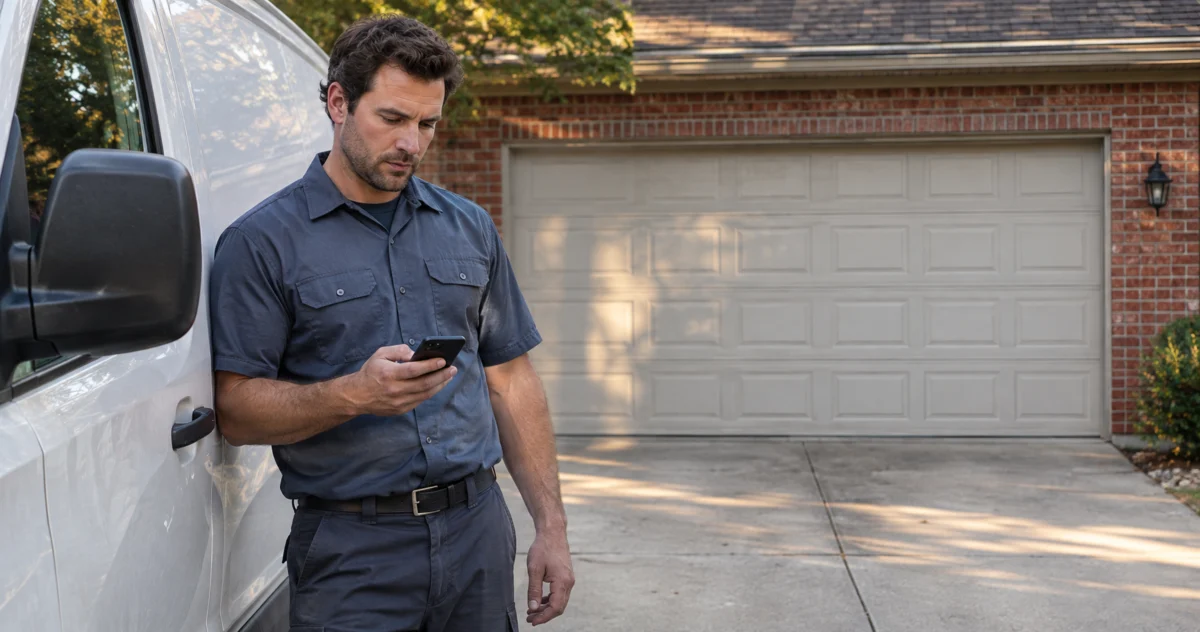
Start with a short invitation, then identify the request
Check how the chosen phone service handles an unanswered call, a busy line, and voicemail before turning on text-back. Verify the sending number and where replies appear. Avoid overlapping messages from two systems.
Illustrative first message: “Hi, this is [Garage Door Company]. Sorry we missed your call. Please reply with your name, service address, and a brief description of what you need.” Allow a partial answer. Someone may be asking for a replacement estimate, reporting an operating problem, or calling about a visit already arranged.
Record the observation without turning it into a diagnosis
“The opener is broken” is the caller’s interpretation. “The door is closed and did not move when I used the remote” describes what they observed. Preserve both when useful, but mark the cause as unconfirmed.
IDEA states that specific door and operator problems require diagnosis by a qualified technician. Intake should collect information already known to the caller. It should not ask them to operate the door again, release it, move hardware, or perform a test to narrow down the fault.
When relevant, ask whether the door is currently open, partly open, closed, or unknown, and what access concern the caller reports. Keep that report separate from any technical assessment.
Use three administrative paths
- Service request: capture the reported condition, address, access concern, and callback details for human review.
- Estimate inquiry: record replacement or new installation, number of openings, broad preferences, and requested project timing.
- Previous work or appointment: match the property to the job record and send the question to someone who can review it.
A single conversation can contain more than one need. “You installed our opener, and now we want a new door” needs both the existing record and an estimate discussion. Do not overwrite the first reason when adding the second.
Make the callback record actionable
A practical office record includes the caller’s name and number, property address, reason for calling, relevant prior job, missing information, and assigned follow-up person. Add whether the caller is an owner, tenant, or property manager and who will authorize work when that affects coordination.
Use separate statuses for received, reviewed, and appointment confirmed. A requested day belongs in the notes until an authorized person checks scope, service area, access, and availability.
Illustrative handoff: “Caller reports door partly open; concerned about leaving property unsecured; cause unknown; returning customer at a different address; service manager to review.” That gives the next person useful context without inventing a repair or promising a visit.
Keep the phone callback path working
Decide how staff will find missed calls when a text cannot be delivered, the caller prefers voice, or no reply arrives. Review any available voicemail and retain an assigned callback task. Silence is an unknown outcome.
If someone asks to stop receiving texts, record the preference and follow the phone provider’s actual opt-out behavior. Arrange the next permitted contact through the office process. Do not keep sending the same reminder from a second number.
Technicians should review messages when they can safely stop work. Coverage should not depend on handling a phone while driving or during hands-on mechanical work.
Test the complete handoff
Run sample calls for a stuck-open report, a replacement inquiry, a previous installation, a caller who cannot text, no reply, and a request to change an appointment. Check whether the original call, voicemail, replies, and assigned next action can be found together.
During review, ask: Did the business identify the actual property? Did anyone assume a diagnosis or warranty outcome? Did a requested date accidentally become a confirmed booking? Use the service-call routing guide to define who reviews access concerns and requests outside normal scope.
Missed-Call Text Back for Garage Door Contractors FAQs
Does text-back replace the missed phone call?
It creates another way to continue the conversation. Keep a voice callback route for callers who cannot text, prefer a call, or do not reply.
Should the first text ask whether a spring is broken?
Ask what the caller has observed and what they need. Record a reported broken spring as unconfirmed unless a qualified person has already assessed it. Do not ask the caller to investigate.
Can the same workflow handle replacement estimates?
Yes, if staff can distinguish an estimate inquiry from a service request and collect the appropriate follow-up details. An estimate request does not confirm a measurement visit.
What if the caller gives two different addresses?
Confirm which property needs attention and retain the other address only if relevant to a previous job. A matching phone number does not establish the service location.
What should happen after no text reply?
Keep the call in the office’s callback process, review available voicemail, and assign a person to determine the next step. Do not automatically mark it resolved.
Can intake automatically confirm an appointment?
Treat booking as a separate capability and policy. Unless a verified setup has authority to offer the correct visit type and availability, collect preferences and have an authorized person confirm the appointment.