
HVAC Missed-Call Text Back for Residential Service Calls
Can missed-call text-back help a residential HVAC business recover homeowner calls that were missed during jobs, after hours, or weather spikes?
When an HVAC homeowner call comes in during a job, after hours, or in a weather spike, missed-call text-back gives the caller a fast next step without interrupting the crew.
A small residential HVAC team misses homeowner calls while technicians are on jobs, driving, after hours, weekends, or during no-cool/no-heat weather spikes.
Direct answer
HVAC missed-call text-back is a recovery workflow that starts after a homeowner call is missed. Instead of waiting for voicemail or a manual callback, the homeowner receives a text that collects the issue, service address, urgency, and contact details. Book Every Job applies that workflow to residential HVAC teams, then filters low-fit calls and moves qualified requests toward booking or review when the business rules are clear.
Why HVAC calls get missed
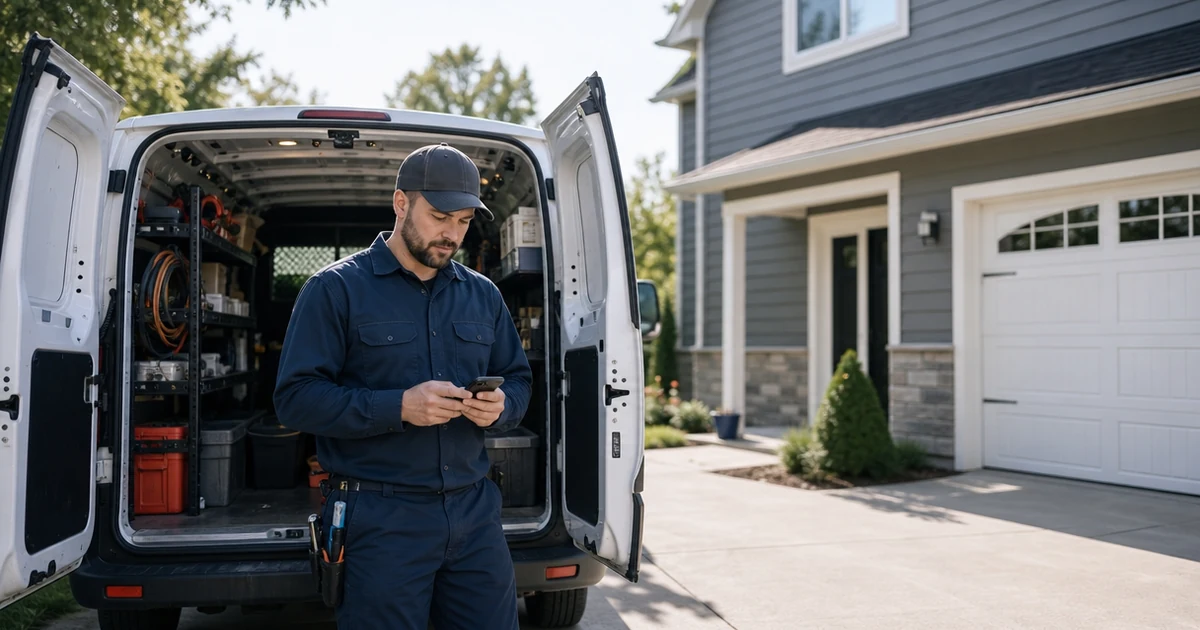
HVAC calls are easy to miss because the work pulls the team away from the phone. A technician may be in an attic, basement, crawl space, mechanical room, or driving between jobs. During hot or cold weather, no-cool and no-heat calls can come in while the office is already helping another customer.
Whether to use missed-call text-back, live answering, or both for residential HVAC service calls.
Where Book Every Job fits and where it does not
This page is for residential service businesses where homeowner calls affect whether a job is won or lost.
Good fit
Best fit: residential HVAC teams that miss homeowner calls during jobs, driving, after hours, weekends, or weather spikes and need a fast text-back recovery path.
- Small residential HVAC teams that miss calls while technicians are on jobs
- Owner-operators or lightly staffed offices that need a fast homeowner response path
- Companies that want no-cool, no-heat, service, and estimate requests collected by text
- Teams that want service-area and booking rules applied before jobs are booked
Not the right fit
Not a fit: businesses that need live emergency triage on every call, full-time live coverage, commercial-only workflows, or complex dispatch decisions before any scheduling step.
- Businesses that need live emergency triage on every call
- Commercial-only or property-management-only HVAC operations
- Companies that already have complete live coverage and no missed-call problem
- Requests that should be collected and routed for review before scheduling, such as complex replacement estimates or unclear emergencies
When to use an answering service, Book Every Job, or both
Use an answering service when…
Use a live answering service when emergency triage, dispatch judgment, or human coverage for every call is required.
Use Book Every Job when…
Use Book Every Job when the main gap is missed homeowner calls and the business needs fast text-back, job-detail collection, service-area filtering, and booking support after the call is missed.
Use both when…
Use both when live coverage handles urgent calls but missed-call text-back catches calls that still slip through during busy periods, after hours, weekends, or weather spikes.
How Book Every Job works after a missed call
After an HVAC call is missed, the workflow sends a text, collects the issue, address, urgency, and contact details, filters low-fit requests, and moves qualified calls toward booking or review.
1. HVAC call is missed
A no-cool, no-heat, service, or estimate call comes in while the team is already in the field.
2. Fast HVAC text goes out
The homeowner gets a quick text instead of waiting for a cold callback.
3. Homeowner shares the problem
The reply gives your team the issue, urgency, and address before anyone has to call back blind.
4. Team prioritizes and books
Your team can sort urgent service from routine requests and move the call toward scheduling.
Common missed-call situations this covers
These are the kinds of calls and workday moments where a missed-call text-back layer can help without pretending every request should be booked automatically.
Missed-call moments
- A technician is in an attic, basement, crawl space, or mechanical room
- The owner is driving between service calls during a weather spike
- The office is already on another call when a no-cool or no-heat request comes in
- A homeowner calls after hours and does not want to wait until morning
- A weekend service request comes in while the team is away from the phone
High-intent job types
- No cooling during hot weather
- No heat during cold weather
- System not keeping up or running constantly
- Thermostat or airflow issue
- Replacement estimate or second-opinion request
Calls to filter or review
- Warranty, vendor, or supplier calls that are not homeowner service requests
- Commercial-only or property-management requests outside the business focus
- Calls outside the residential service area
- Wrong numbers or spam calls
- Requests that need human review before booking, such as complex replacement work
How service area and booking rules are handled
Book Every Job should only move a call toward booking when the request matches the business rules. When something is uncertain, the safer workflow is to collect the details and route the lead for review.
Service area checks
For HVAC missed-call text-back, confirm that the service address is inside the company’s residential service area before moving the caller toward booking. Calls outside the service area should be collected and routed for review instead of auto-booked.
Booking qualification
HVAC requests should be booked only when the job type, urgency, address, appointment type, calendar availability, and business rules are clear. Emergency calls, replacement estimates, commercial work, or uncertain requests should be routed for human review.
HVAC missed-call text-back FAQs
What is HVAC missed-call text-back?
HVAC missed-call text-back sends a text after a homeowner call is missed. It helps collect the issue, service address, urgency, and contact details so the request can move toward booking or review.
Can it help with no-cooling or no-heat calls?
Yes. No-cooling and no-heat calls are good examples because the homeowner usually wants a fast next step. The system can collect the details right away while the HVAC team is still on another job.
Does this replace an HVAC answering service?
No. It is not a live answering service. It is a missed-call recovery layer that starts by text after the call is missed.
Can it book HVAC jobs directly?
Yes, when calendar access, service-area rules, appointment types, and booking rules are configured. If the request needs review, the system can collect the details and route it to the team.
What HVAC calls should not be auto-booked?
Requests outside the service area, commercial-only work, complex replacement estimates, unclear emergencies, and unusual requests should be routed for human review instead of booked automatically.
Do customers still call the normal HVAC business number?
Yes. The business can usually keep its existing number. The exact setup depends on the phone provider and missed-call routing options.